
Solutions
Search and rescue
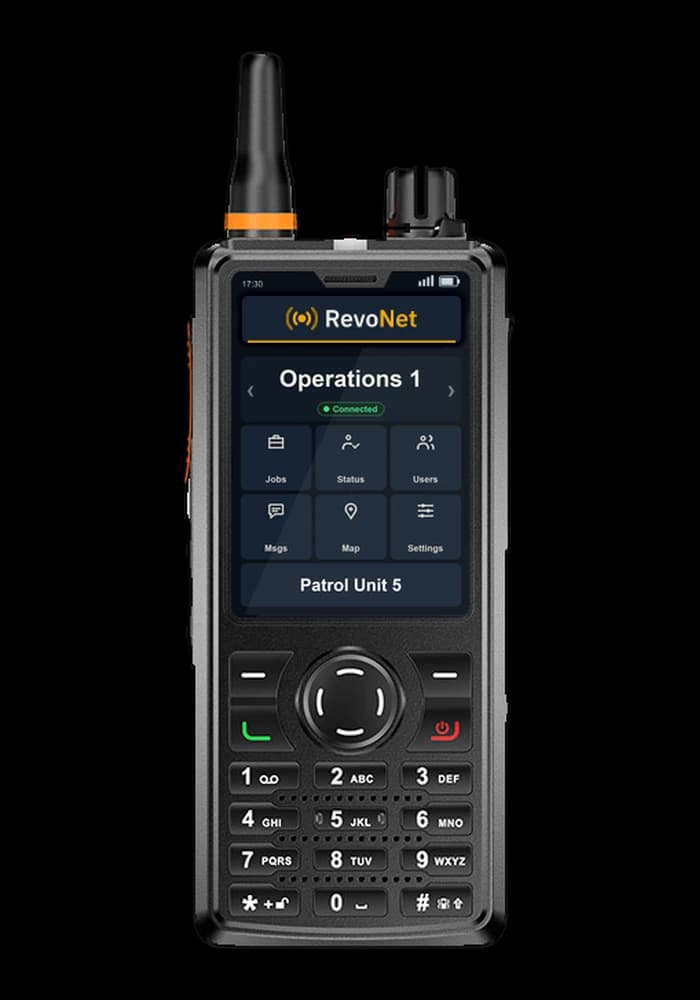
Volunteers use the phones they already own, and a call-out needs clear voice and a map that everyone can see. RevoNet gives your team both, without anyone pasting locations into a group chat.
Sound familiar?
What makes it hard today
- Consumer apps with no discipline about who speaks when
- Positions shared by hand and always a step behind the search
- Hard to piece together afterwards who was where
With RevoNet
One radio network for the whole operation
- Push-to-talk on volunteers' own phones
- A map showing your team during the search
- A timeline to look back on after stand-down
The RevoNet system
Radios, connectivity and control, managed together
Getting started
Try it on a real operation
Volunteer teams usually run RevoNet on the phones members already own, since call-outs are occasional and a set of dedicated radios is hard to justify. The free tier covers a coordinator and one volunteer, which is enough to practise group discipline and the map before a real call-out.
Where to start
Related reading
- Why consumer apps fail search and rescue call-outs
Clear group voice and shared positions on volunteers' own phones, instead of a chat where the one message that mattered gets buried.
- Testing mobile coverage before a call-out
How to try push-to-talk over the mobile network on your own ground, so your team is confident before a call-out.
- What is push-to-talk over the mobile network?
A plain-English guide for managers who want to move on from WhatsApp without buying a whole radio estate.
- Push-to-talk radios compared with traditional two-way radio
How push-to-talk radios and traditional two-way radio compare on cost, coverage and day-to-day use.
- Live GPS tracking for field teams
What supervisors actually want from a map, and how to introduce it to a team so it is welcomed.
Put RevoNet on a real operation
Tell us about your team. We will set up a small RevoNet network and agree with you what goes out for the trial.